Best Cutting Boards for Food Prep & Fermentation (2026)
Updated 202610 min read6 products reviewed
Affiliate Disclosure: We may earn a commission if you purchase through our links, at no extra cost to you. Our editorial selections are independent.
A cutting board is the foundation of all food prep, and yet most home kitchens have one board that does everything — raw proteins, vegetables, bread, and fermentation work — increasing cross-contamination risk and degrading knife edges faster than necessary. In 2026, the cutting board market offers materials from deep-carbonized bamboo to titanium-reinforced composite and dishwasher-safe plastic sets designed explicitly for dedicated use. The right cutting board for fermentation prep keeps knife edges sharp for the fine shredding work that cabbage and daikon require, is easy to clean between raw protein and vegetable tasks, and is large enough to work efficiently without produce falling off the edge. We evaluated six cutting boards for material durability, knife-friendliness, cleaning convenience, and overall kitchen utility.
Quick Comparison
Product
Best For
Key Feature
Top Con
Link
Astercook Deep-Carbonized Bamboo Cutting Board with Stand
Best Overall
Deep carbonization process creates a denser, harder surface than standard bamboo boards
Bamboo hardness can dull blade edges faster than softer wood or plastic alternatives
Pro Tip: Fermentation prep tip: use a dedicated 'fermentation board' that never contacts raw protein. Keep it near your fermentation jars and use it exclusively for vegetable prep — this eliminates the hygiene concern of transferring meat residue into fermentation vessels.
1.EDITOR'S PICK
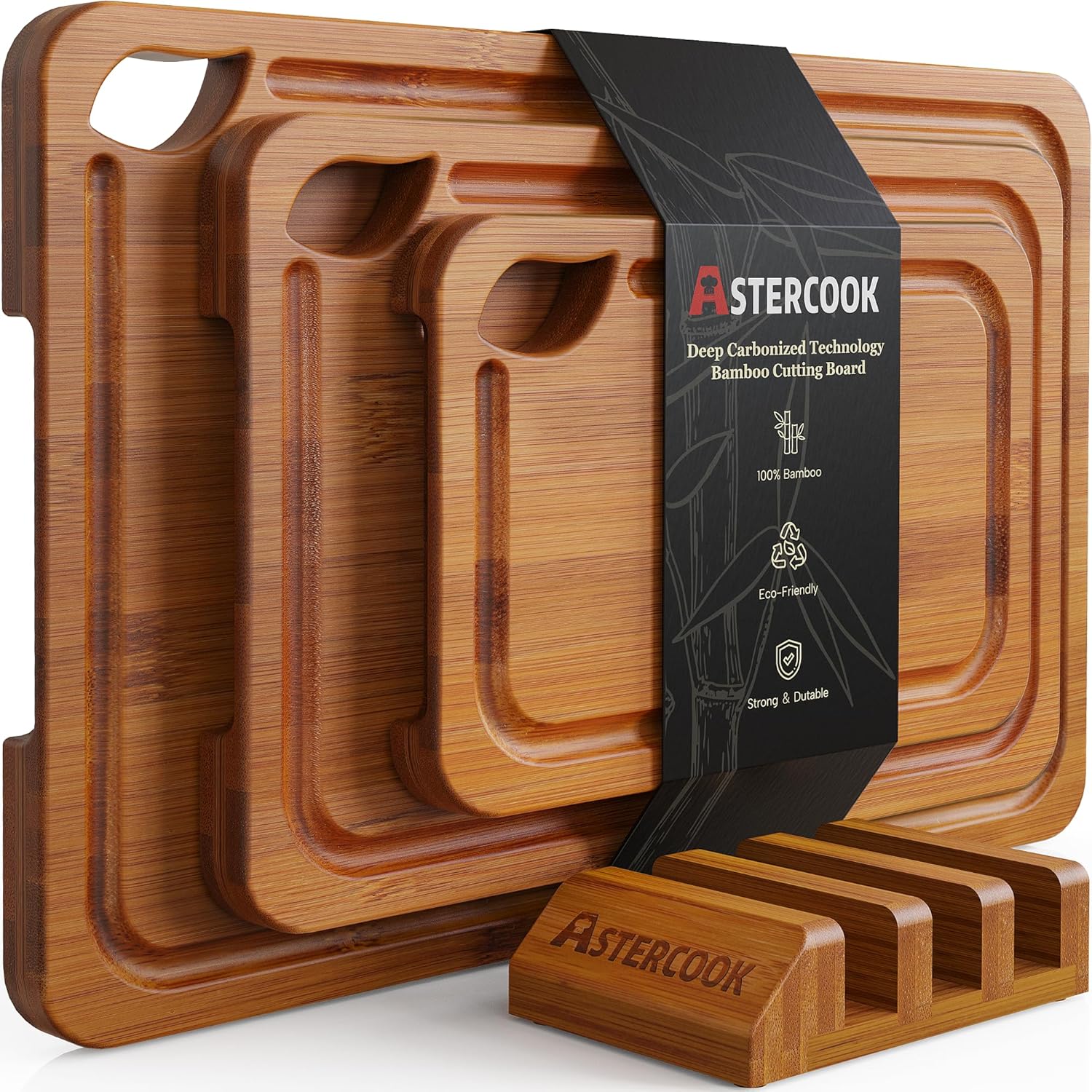
Astercook Deep-Carbonized Bamboo Cutting Board with Stand
A deep-carbonized bamboo cutting board with a built-in stand — the dark surface is harder and more moisture-resistant than standard bamboo, with juice grooves and a reversible design for maximum kitchen utility.
Considerations
Bamboo hardness can dull blade edges faster than softer wood or plastic alternatives
Stand base requires cleaning separately and can trap moisture if not dried thoroughly
Deep carbonization process creates a denser, harder surface than standard bamboo boards
Includes a vertical stand for space-saving upright storage between uses
Dual juice grooves on both sides contain liquids from carving and produce prep
Reversible design doubles the usable surface before requiring oiling or replacement
Home cooks who want a premium bamboo board for daily prep work, carving, and fermentation vegetable slicing with organized under-counter storage in a vertical stand.
Use the grooved side for carving meats and juicy fruits; use the flat reverse for dry chopping and fine knife work. Oil monthly with food-grade mineral oil to maintain surface resistance and prevent cracking.
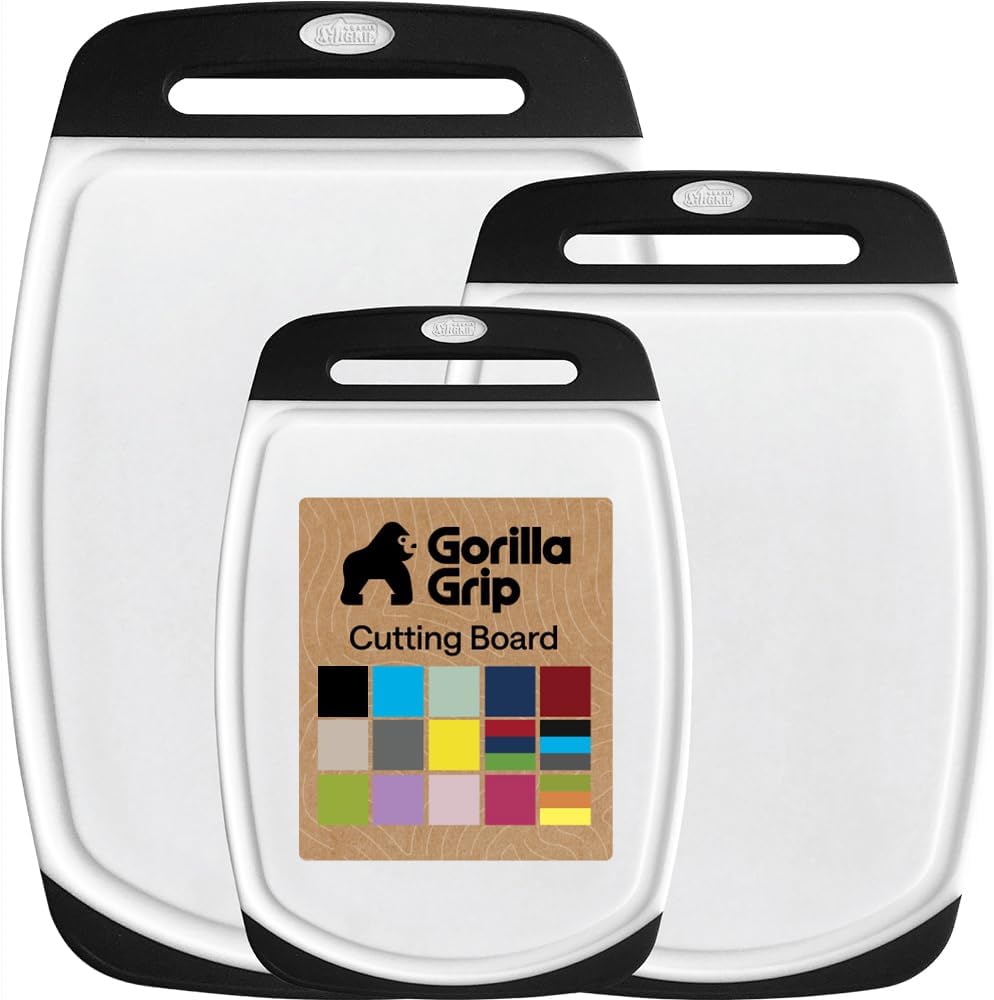
Gorilla Grip BPA-Free Cutting Board Set of 3 Black
A set of three BPA-free cutting boards in small, medium, and large — dishwasher-safe, non-slip, and color-coded for cross-contamination prevention at a price point that makes dedicated boards practical.
Considerations
Plastic shows knife marks over time — replace when deep grooves accumulate
Less aesthetically refined than wood or bamboo options for open kitchen displays
Set of 3 sizes allows dedicated boards for proteins, produce, and fermentation prep
Dishwasher-safe plastic is the most hygienic option for raw meat contact surfaces
Non-slip grip edges prevent the board from sliding during fast chopping
BPA-free materials meet food safety standards for all food contact applications
Home cooks who want a practical, hygienic three-board system for segregating proteins, vegetables, and fermentation prep at an accessible price with easy dishwasher cleaning.
Designate each board by food type to prevent cross-contamination. Wash in the dishwasher after each use, especially the protein board. Replace boards when deep knife grooves become difficult to clean thoroughly.
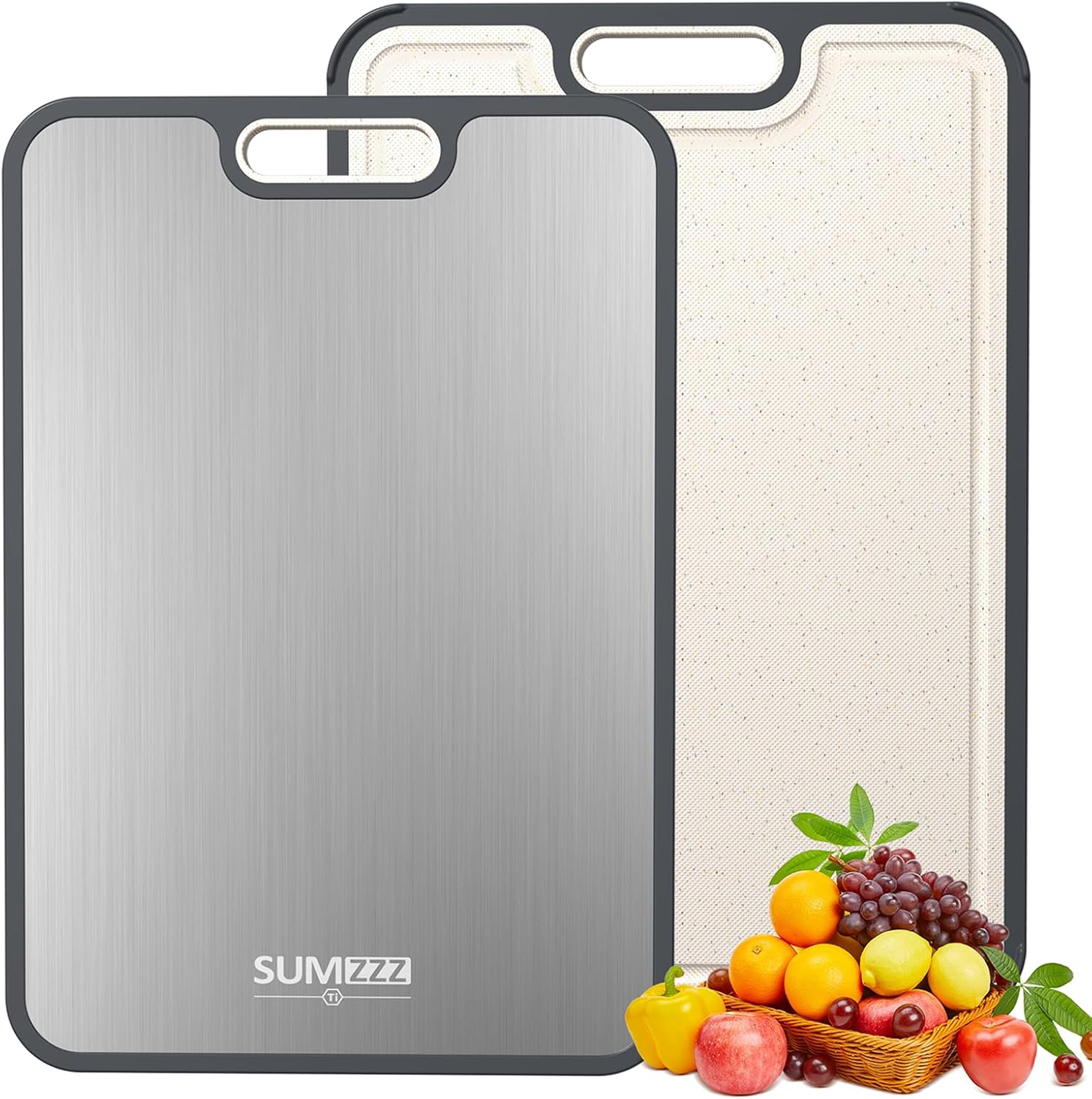
A double-sided cutting board with titanium-reinforced construction — dishwasher-safe, non-porous, and resistant to the deep knife grooves that harbor bacteria on standard plastic boards.
Considerations
Harder surface can dull knife edges faster than softer wood alternatives
Edge gripping strips require inspection periodically to ensure they remain firmly attached
Titanium reinforcement creates a harder surface that resists deep knife scoring
Double-sided design extends usable life before any surface degradation occurs
Non-porous material provides no harboring sites for bacteria or fermentation cultures
Dishwasher-safe throughout its entire useful life without warping
Home cooks who want a hygienic, long-lasting cutting surface that resists the deep knife grooves of standard plastic while remaining fully dishwasher-safe for thorough sterilization.
Use either side for food prep, flipping to the clean side for sensitive tasks like bread cutting or soft cheese. Run through the dishwasher after protein contact. Inspect periodically for deep grooves that warrant replacement.
Royal Craft Wood Bamboo Cutting Board Set with Juice Groove
A natural bamboo cutting board with deep juice grooves, grip handles, and a polished finish — a beginner-friendly board that looks professional and handles everyday prep work without complication.
Considerations
Requires monthly mineral oil conditioning to prevent drying and surface cracking
Not dishwasher-safe — hand-wash only to prevent warping and splitting
Deep juice grooves contain liquid from carving without overflow onto the counter
Natural bamboo surface is gentle on knife edges compared to harder composite materials
Integrated grip handles make moving heavy boards during prep straightforward
Polished appearance suits both functional prep and serving presentations
Beginning home cooks who want a quality bamboo board for everyday vegetable prep, bread cutting, and occasional protein carving with an approachable design.
Hand-wash with warm soapy water after each use and dry immediately — never soak or submerge. Apply a thin coat of food-grade mineral oil monthly and buff off the excess after 15 minutes.
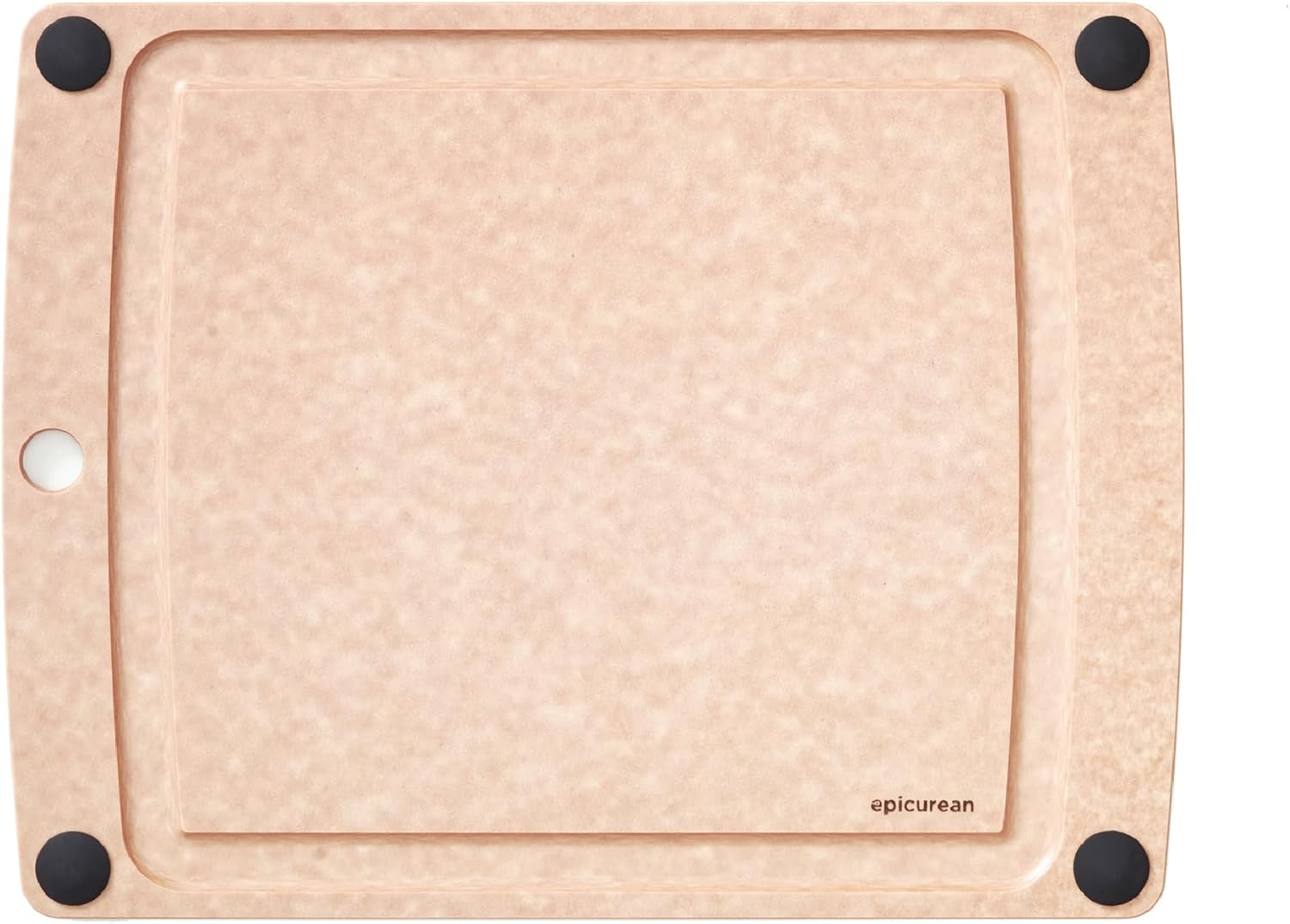
Epicurean Kitchen Series Cutting Board 14.5×11.25" Natural
Epicurean's kitchen-series composite board — made from compressed wood fiber and resin, dishwasher-safe, knife-friendly, and resistant to the deep grooves that degrade standard plastic boards.
Considerations
Natural tan color shows staining from beets, turmeric, and dark fermentation brines
Not reversible — single-sided design limits usable surface before replacement
Composite construction is dishwasher-safe without the warping risk of solid wood
Gentler on knife edges than glass, ceramic, or hardened plastic alternatives
Non-porous surface is certified NSF-safe and resists bacteria harboring in surface grooves
Thin, lightweight profile takes up minimal drawer space when stored
Home cooks who want the knife-friendliness of wood with the dishwasher convenience of plastic — a genuine functional middle ground in one well-proven product.
Use for all daily chopping and prep tasks. Run through the dishwasher regularly for thorough cleaning. The composite surface requires no oiling or special treatment — simply wash and use.
Epicurean All-In-One Cutting Board with Non-Slip Feet & Juice Groove
Epicurean's all-in-one composite board with non-slip rubber feet, a juice groove, and a built-in corner pocket — a fully featured prep station that stays put and contains mess.
Considerations
Rubber feet require periodic inspection — can detach with heavy dishwasher cycling over years
Heavier than thin composite alternatives due to the built-in feature set
Non-slip rubber feet eliminate sliding during intensive chopping without a damp towel
Built-in juice groove captures liquid from carving and juicy produce prep
Corner scraper pocket collects chopped ingredients for easy transfer to a bowl or pan
Dishwasher-safe composite material requires zero maintenance between uses
Home cooks who want a single all-featured board that stays stable, captures juice, and assists with ingredient transfer — eliminating the need for separate baking mats or extra bowls during prep.
Set on a dry counter — the rubber feet provide grip without a towel. Use the juice groove for carving and juicy produce. Scrape chopped ingredients into the corner pocket for clean bowl transfer. Dishwasher-safe.
Note: Grip test your board before each session: if it slides, place a damp dish towel underneath. Even non-slip boards lose their grip on wet or oily countertops, and a moving board is the primary cause of off-angle knife work and accidental cuts.
Buying Guide
Bamboo vs. Plastic vs. Composite: Material Comparison
Three material categories dominate the home cutting board market. Bamboo boards are harder than most wood species, which some users appreciate for durability — but this same hardness is harder on knife edges than softer woods like hinoki or maple. Bamboo is naturally antimicrobial and water-resistant when properly oiled, but is not dishwasher-safe. Standard HDPE plastic boards are the most hygienic option for protein cutting — dishwasher-safe, non-porous, and inexpensive to replace when knife grooves accumulate. The FDA's food safety guidelines recommend replacing plastic cutting boards when deep knife scores become difficult to clean thoroughly, as grooves can harbor bacteria. Composite boards (like Epicurean's compressed wood fiber material) combine knife-friendliness similar to wood with the dishwasher compatibility of plastic, providing a genuine functional middle ground.
Juice Grooves: Practical Necessity or Marketing Feature
Juice grooves — channels cut into the board surface near the edges — serve a genuine functional purpose when carving proteins and cutting high-moisture produce. A board without juice grooves channels liquid from a resting steak or a halved watermelon directly off the board edge and onto the counter. A board with adequate juice grooves contains this liquid on the board surface until you're ready to move it. For fermentation prep work — shredding cabbage, slicing daikon, and cutting produce for kimchi — juice grooves are less critical because you're working with raw vegetables rather than proteins or liquid-heavy fruits. If you use one board for both carving and vegetable prep, juice grooves are worth having. If boards are dedicated to specific tasks, the vegetable prep board can forgo the grooves.
Dedicated Boards and Cross-Contamination Prevention
The USDA's food safety guidelines explicitly recommend using separate cutting boards for raw proteins and ready-to-eat foods including vegetables and bread. A set of three boards — designated for raw meat, raw fish, and produce — eliminates cross-contamination risk that a single board cannot fully resolve through washing alone. Color coding helps maintain the separation habit: red for raw meat, yellow for poultry, green for vegetables. For home fermenters, a dedicated vegetable prep board that never contacts raw protein is both a hygienic choice and a practical one — it stays clean enough to use for direct-to-jar prep without transferring meat residue into fermentation vessels.
Knife-Friendliness: Which Materials Preserve Your Blades
Cutting board hardness directly affects knife edge retention. Glass, ceramic, and very hard composite boards are the worst choices for knife longevity — a single session of chopping on glass dulls a sharp blade more than weeks of use on an appropriate surface. The ideal cutting board material is softer than the knife steel but resilient enough to close over surface cuts between uses. Soft-to-medium hardwood (hinoki, maple, cherry), thick HDPE plastic, and Epicurean-style compressed composite materials all fall in this range. Hard bamboo and most stone boards are harder than ideal. For fermenters who do extensive cabbage shredding and mandoline follow-up knife work, a board that protects knife edges over thousands of prep sessions is worth the investment.
Replace plastic cutting boards when deep knife grooves are difficult to clean effectively — run your thumb across the surface and if you can feel significant grooves that catch a fingernail, bacteria can harbor there through normal dishwasher cleaning. For bamboo and wood boards, deep grooves indicate the board needs replacement or resurfacing with 80-grit sandpaper followed by thorough mineral oil conditioning. A board used for raw protein daily should be inspected every 6–12 months.
Apply food-grade mineral oil monthly: pour a small pool of oil onto the board surface and rub thoroughly with a clean cloth, including the edges and bottom. Allow to absorb for 30 minutes, then buff off any excess. Never soak bamboo or wood boards in water, never run through a dishwasher, and dry immediately after washing. Drying flat rather than on edge prevents warping. A well-maintained bamboo board lasts many years; a neglected one warps and cracks within months.
Bamboo is naturally antimicrobial due to bamboo kun — a naturally occurring biocidal substance in bamboo fiber. However, the FDA does not certify bamboo as safer than other cutting board materials for raw protein contact, and the natural antimicrobial properties diminish over time with wear. The same cross-contamination hygiene practices apply to bamboo as to wood boards: wash thoroughly with hot soapy water after protein contact, and consider a dedicated board for raw proteins rather than relying on any board's material properties alone.
The practical minimum cutting board size for home cooking is 12×16 inches — large enough to prep a full head of cabbage without pieces falling off the edge, and wide enough to work with a large chef's knife comfortably. For batch fermentation prep involving multiple large vegetables, a 15×20 inch board provides meaningful additional workspace. Boards smaller than 10×14 inches are only appropriate for dedicated tasks like bread slicing, where the workspace requirement is limited.
Yes — a dedicated bread cutting board (or the clean side of a reversible board) works well for sourdough slicing. Use a smooth, flat surface without deep knife grooves that can deflect a bread knife. A board with grip feet prevents sliding during the sawing motion of bread cutting. The composite materials in Epicurean boards are particularly well-suited for bread cutting because they don't dull serrated bread knives and are dishwasher-safe for daily cleaning.
The food safety research is genuinely nuanced: plastic boards are easier to sanitize in a dishwasher and don't harbor bacteria in the surface material itself, but deep knife grooves in plastic can harbor bacteria that resist cleaning. Wood and bamboo have natural antimicrobial properties but cannot be fully sanitized in a dishwasher. The FDA's practical guidance is to use separate boards for proteins and produce regardless of material, replace boards when grooves become significant, and wash thoroughly with hot water and soap after every protein contact.
Our Recommendation
For most home cooks, our Best Overall pick — Astercook Deep-Carbonized Bamboo Cutting Board with Stand — offers the best balance of performance, reliability, and value. If budget is a priority, our Best Value pick — Gorilla Grip BPA-Free Cutting Board Set of 3 Black — delivers excellent results at a lower investment. Experienced cooks who want maximum performance should consider our Editor's Pick — Titanium Cutting Board Double-Sided 15"×10.3".